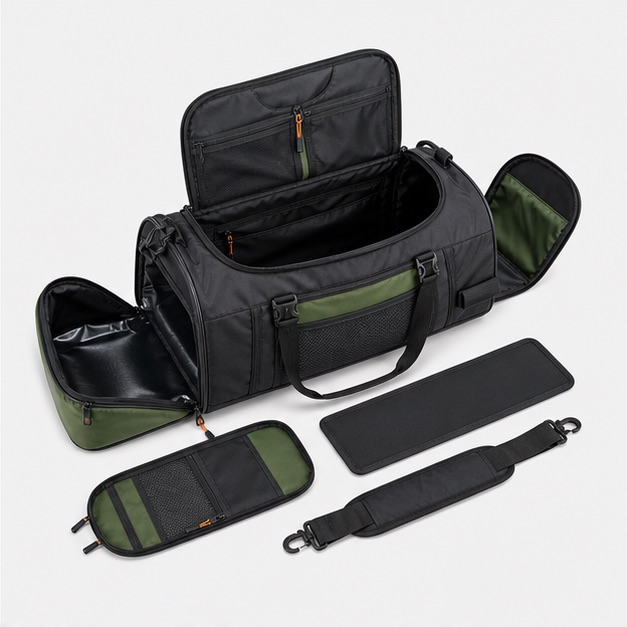
For a buyer, the difficult part of sourcing custom bags is rarely finding a supplier who says yes. The difficult part is confirming that the supplier understands the product, can control the details and is willing to show evidence before an order becomes expensive.
Start with the product, not the sales presentation
A capable OEM/ODM partner should be able to turn a design brief into a workable specification. Before sampling, buyers should confirm:
- intended use and target market;
- finished dimensions and loading requirements;
- shell, lining, reinforcement and padding materials;
- zipper, buckle, webbing and other hardware specifications;
- logo method, colour and placement;
- packaging and labelling requirements;
- target quantity, delivery window and inspection standard.
This process matters for a leather handbag, a padel bag, a travel duffle or an RFID wallet alike. A sample may look attractive while still failing in use if reinforcement, pocket access, weight distribution or packing requirements were not discussed.
Ask how sample changes are recorded
Buyers should not have to rely on scattered chat messages after the first sample. A useful sample review records each requested change, who approved it and which version will be used for production.
Our project discussions can include dimension checks, material swatches, logo trials, hardware finishes, pocket structure and packaging. Visual concepts are treated as a starting point; construction details still need to be converted into manufacturable specifications and confirmed by the buyer.
Separate factory capability from compliance evidence
A careful buyer should ask three questions about every record: who is named on it, which site or submitted sample it covers, and whether it is an audit, test report, registration or certification.
Cappuccino's production network includes a manufacturing partner audited under the amfori BSCI framework. The audit belongs to that manufacturing partner; it is not a direct certification of Guangzhou Cappuccino Leather Handbag Co., Ltd. amfori explains that BSCI is a social-risk-management system and not a certification.
Selected CAPPUCCINO bag models and submitted materials have undergone third-party restricted-substance testing and passed the limits stated in the corresponding RoHS report. That result applies only to the submitted samples and stated models Cap001 and Cap001-1, not automatically to every product.
Guangzhou Cappuccino Leather Handbag Co., Ltd. is registered as a producer in Germany's LUCID Packaging Register. LUCID is a statutory packaging registration and is not a product quality certificate.
Verify the production plan before bulk payment
Before an order moves forward, request a written summary covering the approved sample, final bill of materials, colours and logo artwork, quantity and tolerance, quality checkpoints, packing marks, schedule, inspection arrangement, shipping terms and destination documents.
The more decisions confirmed before cutting material, the lower the risk of costly changes later. Our custom bag development and quality-control guide explains how these decisions move from brief to bulk production.
Look for a supplier who will state the limits of a claim
A trustworthy supplier should be comfortable saying when a record applies only to one partner factory, one product or one submitted sample. Cappuccino provides relevant, unmodified documents to qualified buyers while protecting confidential factory and commercial information. See the Factory Compliance & Quality Credentials page for the public scope summary.
A practical next step
Send your product images, technical pack or target specification. We can review construction, materials, customisation, MOQ, sampling requirements and the documentation relevant to your destination market.
Frequently asked questions
Is Cappuccino BSCI certified?
No. Cappuccino's production network includes a manufacturing partner audited under the amfori BSCI framework. The audit applies to that partner site and does not represent direct certification of Cappuccino.
Are all Cappuccino bags RoHS certified?
No. Selected models and submitted materials were tested by a third party and passed the limits stated in the report. The result applies only to the submitted samples and stated models.
Can buyers review the original documents?
Relevant unmodified documents can be made available to qualified buyers during supplier verification, subject to confidentiality and project relevance.
What information is needed for an OEM quotation?
Useful starting information includes product type, dimensions, materials, logo method, quantity, target market, packaging and required delivery date.