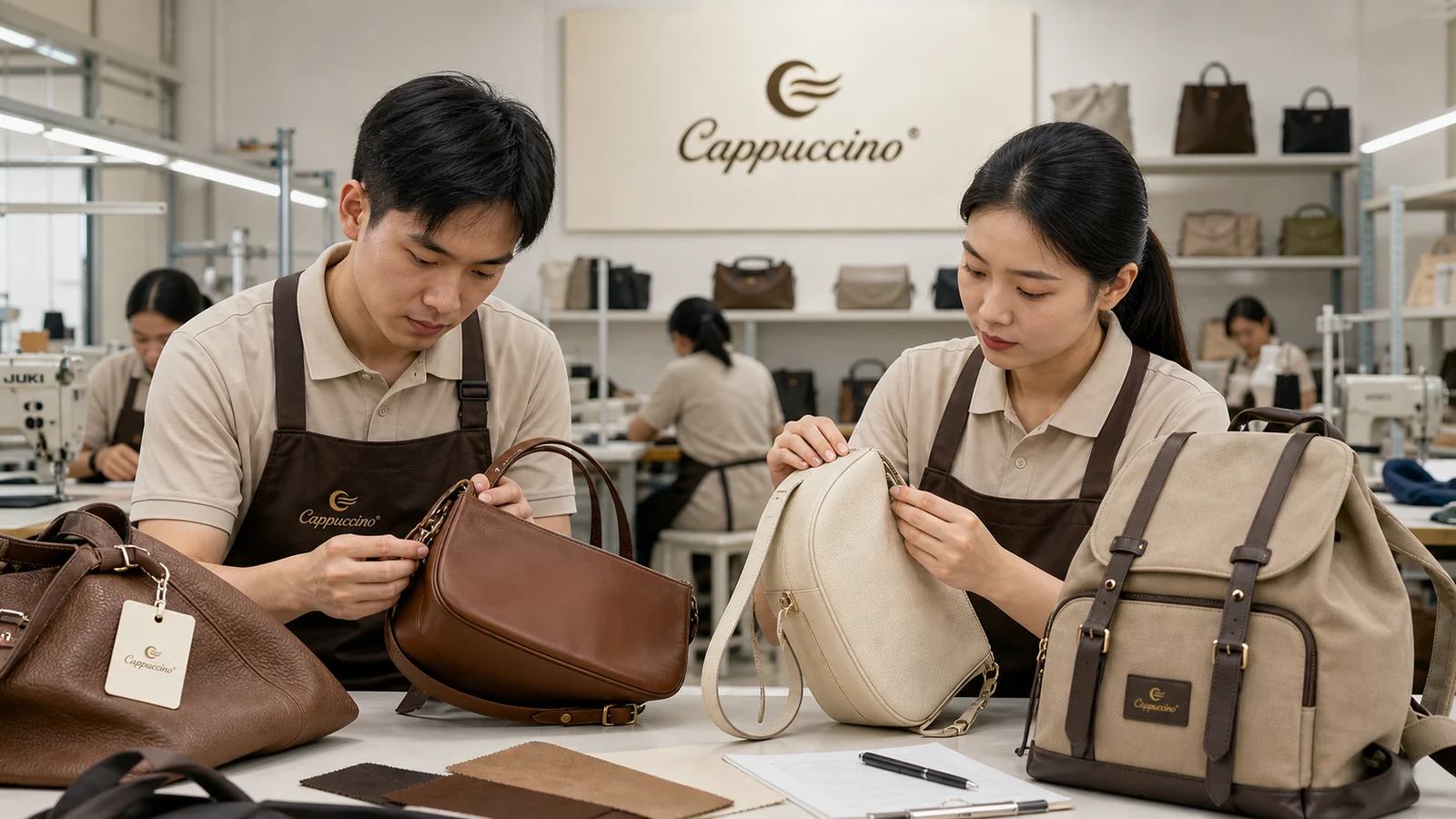
A custom bag project can begin with a detailed technical pack, a physical reference sample, a hand sketch or a visual concept. The starting point may differ, but Guangzhou Cappuccino Leather Handbag Co., Ltd. uses the same decision sequence for OEM and private-label projects.
1. Product feasibility review
The first review is not just about whether a bag can be made. It is about whether it can perform as intended, meet the target price and remain repeatable in production.
We review product category, dimensions, carrying method, expected load, pocket layout, opening structure, material combination, reinforcement and logo method. Racket-sports bags may require racket protection, shoe separation and strap comfort. Travel bags may require trolley sleeves, packing access and base reinforcement. Wallets and cardholders shift the focus to thickness, card capacity, edge finishing and RFID material requirements.
2. Material and component confirmation
Descriptions such as “vegan leather,” “recycled fabric” or “premium zipper” are not precise enough for production. The correct material must be tied to thickness, colour, surface, backing, performance and an approved reference.
- outer material and lining;
- foam, board and structural reinforcement;
- webbing, binding and thread;
- zipper type and puller;
- metal colour and surface finish;
- printed, embossed, embroidered or metal logo;
- label, care card, polybag and carton requirements.
Swatches and component samples help prevent colour or hand-feel differences from being discovered after production begins.
3. Prototype and buyer review
The first sample is where a visual idea meets real construction. It is used to evaluate proportions, usability, material behaviour and assembly.
Buyer feedback should be specific and traceable. We recommend marking changes by location and version—for example, increasing a pocket opening, moving a logo, changing a strap length or replacing a hardware finish. The revised sample or written confirmation becomes the reference for the next step.
4. Pre-production alignment
Before bulk material is cut, the project should have one approved set of information. This may include the approved sample, measurement table, bill of materials, colour and logo references, packing instructions, quantity breakdown, quality criteria and delivery schedule.
This stage is particularly important when one design has several colours or when an order combines different logos and packaging.
5. In-process quality checkpoints
Final inspection alone cannot correct every problem. Typical checkpoints can include incoming material review, cutting and colour matching, logo placement, reinforcement, stitching, assembly, hardware function, measurement, cleaning and packing. The actual inspection plan depends on the product and the buyer's requirements.
For technically demanding projects, buyers may request specific functional or material tests. Testing should always be agreed by product, submitted sample, method and target requirement rather than assumed from a broad marketing statement.
6. Final inspection and shipment preparation
Before shipment, finished products are checked against the approved reference and packing instructions. Carton marks, quantities, assortments and export documents are reviewed according to the confirmed order.
If a buyer uses a third-party inspection company, the standard and booking window should be agreed early enough to avoid delaying shipment.
Clear documentation builds better partnerships
Confidence grows when product decisions are recorded, the sample is verified, production checkpoints are visible and supporting documents are available when relevant.
Cappuccino's production network includes an amfori BSCI-audited manufacturing partner. Selected submitted bag samples and materials—limited to the stated models Cap001 and Cap001-1—passed the restricted-substance limits stated in a third-party RoHS report. Guangzhou Cappuccino Leather Handbag Co., Ltd. is registered as a producer in Germany's LUCID Packaging Register. Each record has a defined scope, explained on our Factory Compliance & Quality Credentials page.
Start with a structured project review
Send your concept, technical pack or reference images together with the target quantity, market and delivery date. Our team can identify missing specifications and prepare the questions needed for a more reliable quotation and sample.
Frequently asked questions
Can you develop a product from a concept image?
A concept image can be used as a visual reference. Dimensions, materials, construction, functions and logo details still need to be defined and confirmed before manufacturing.
Should we order a sample before bulk production?
For a new custom design, a physical sample is strongly recommended. It allows both parties to verify construction, proportions, materials and branding.
Can we arrange third-party inspection?
Inspection requirements can be discussed during order confirmation. The inspection standard, timing and responsible party should be agreed before production is completed.
Do you provide material testing documents?
Available documents depend on the exact material, product and test scope. Relevant records can be reviewed with qualified buyers, and project-specific testing can be discussed where necessary.