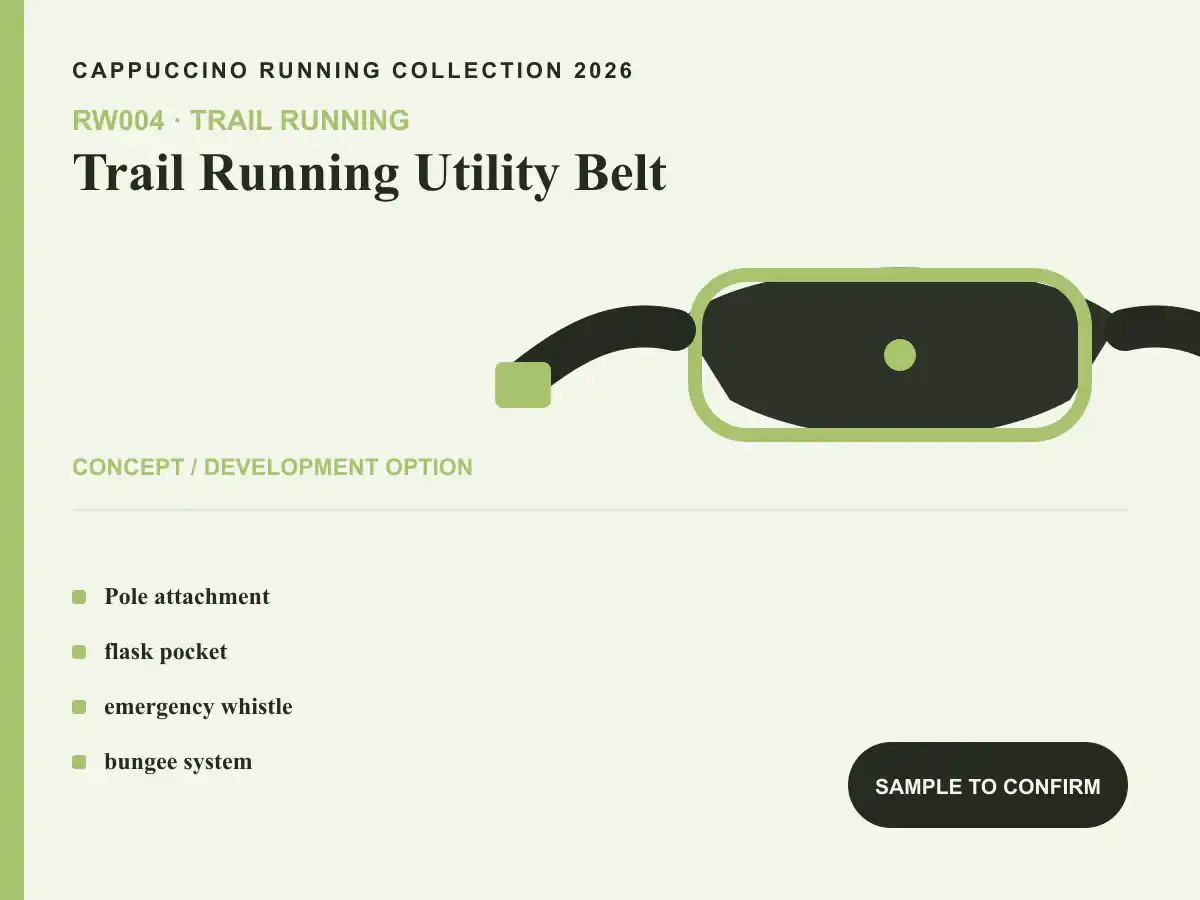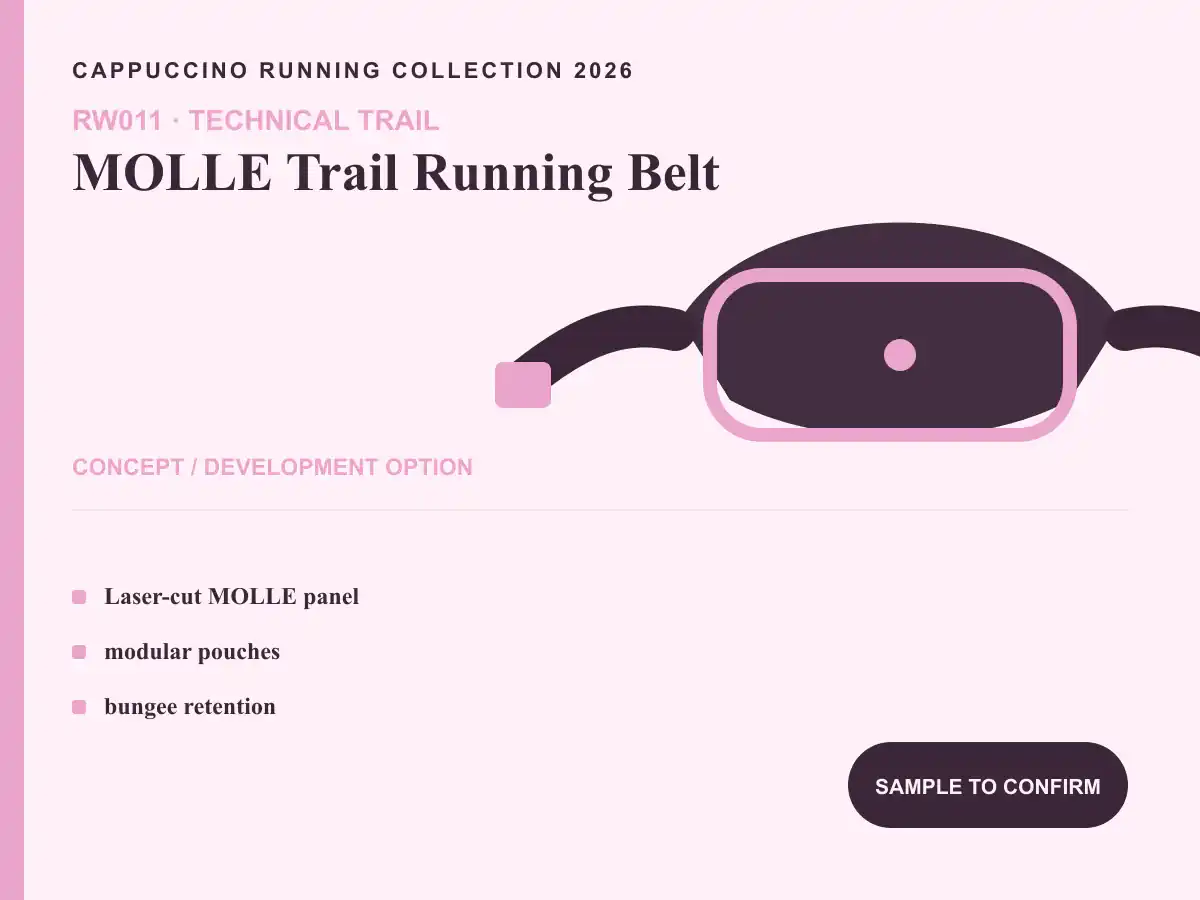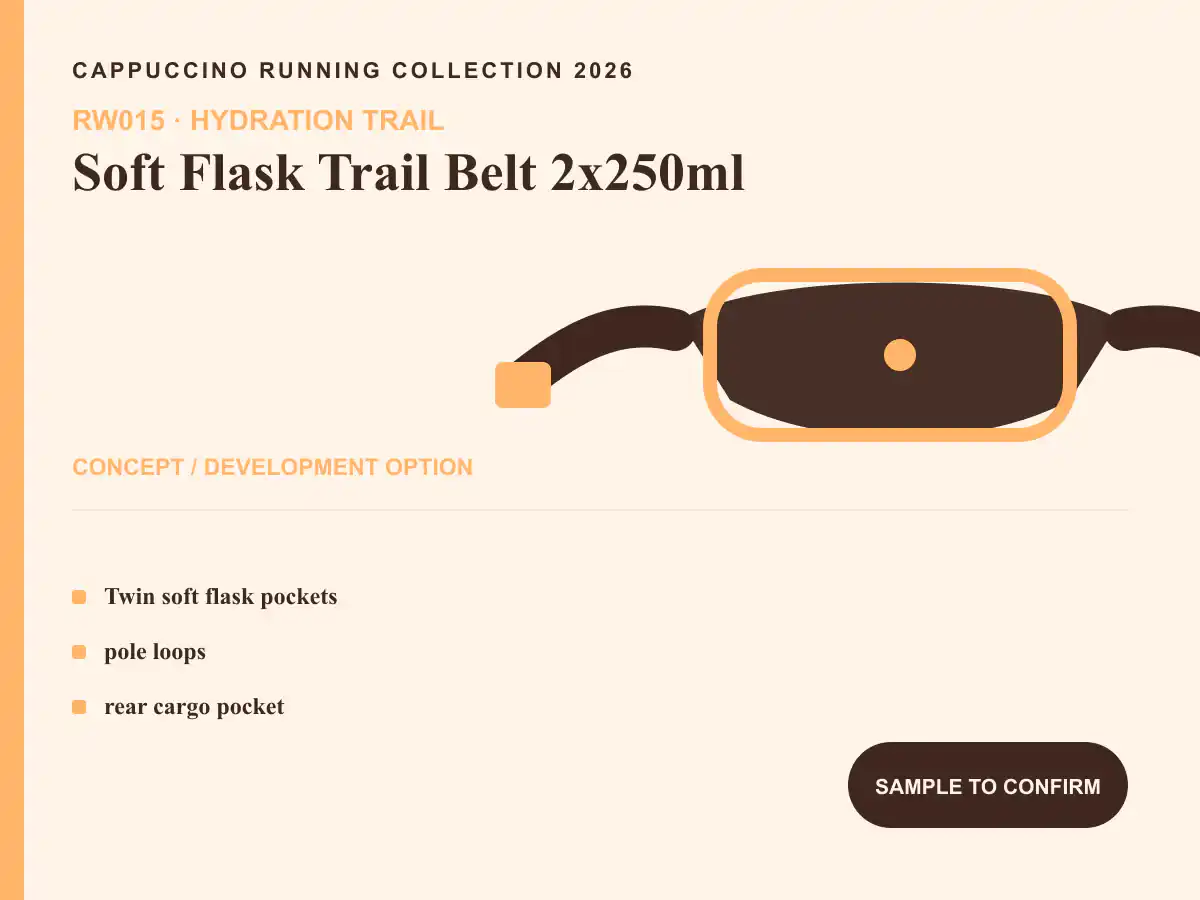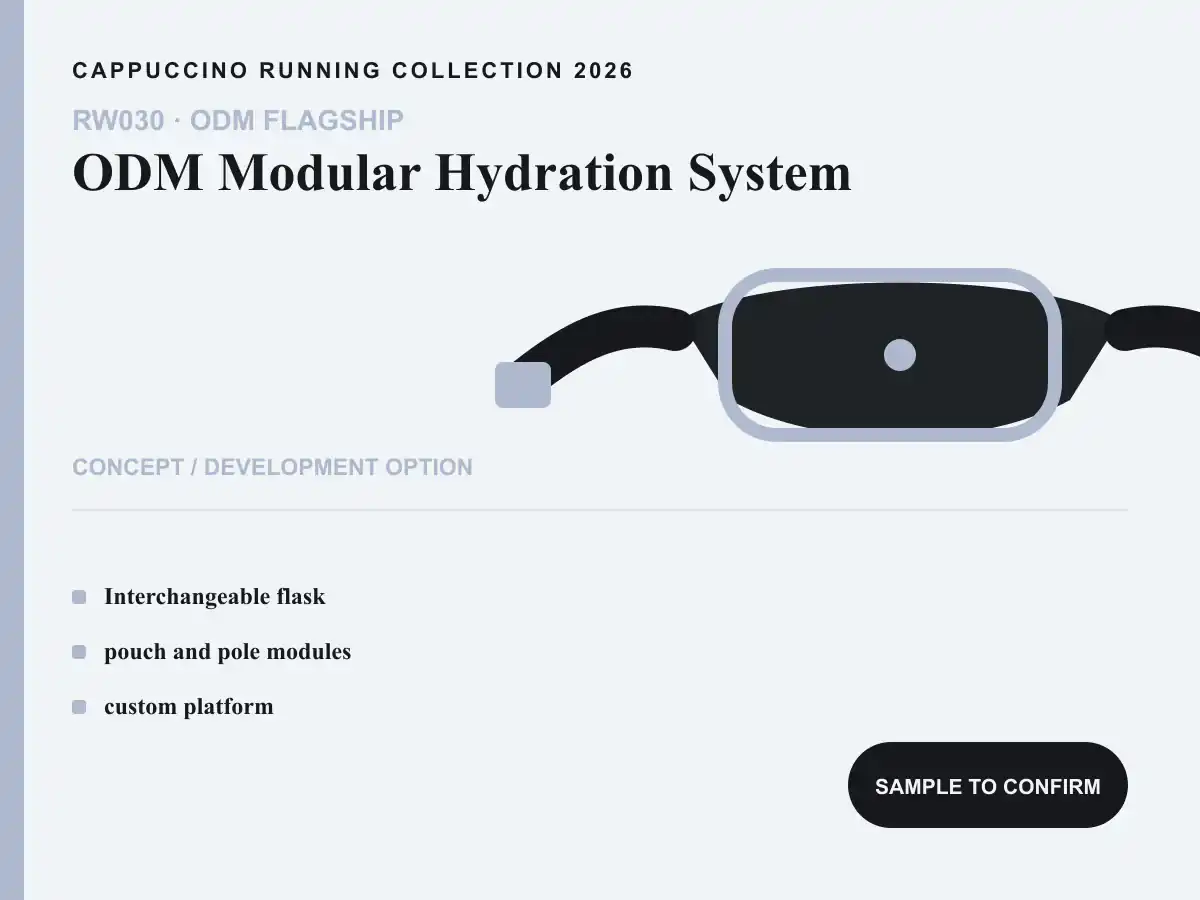
Define the trail use case
Trail belts range from compact phone-and-gel products to modular systems carrying soft flasks, a shell, poles and emergency items. State the intended distance, terrain, climate, aid-station strategy and mandatory gear. This keeps the first sample focused on a realistic load.
List which items need one-handed access and which may sit in secure storage. A rear cargo pocket can hold more, but access and load movement must be tested on the body.
Map cargo and hydration
Position heavy items close to the body and avoid concentrating every item on one side. Flask pockets need retention when full and when partly empty. Pole loops should be evaluated for pole length, bounce, removal direction and interference with arm swing.
A modular system can support different races, but every attachment creates hardware, weight and failure points. Prioritize modules and define how an unused attachment behaves.
Select technical materials without overclaiming
Stretch woven panels and power mesh can create adaptable cargo, while ripstop or coated reinforcement may suit abrasion zones. Breathable contact panels, binding, elastic and seam placement should be evaluated together. If waterproof components are requested, identify exactly which compartment and construction method are in scope.
GRS-source recycled options can be discussed when the buyer specifies documentation needs. The final claim must follow the actual material, transaction and certification scope for the order.
Run trail-relevant sample checks
Test with the intended load on flat ground, climbs and descents. Review rotation, vertical bounce, pressure points, flask security, cargo access, pole movement, buckle security and elastic recovery. Wet-weather or sweat exposure can be added with an agreed method.
Record results by size and body type. If the range is broad, a second size may deliver better stability than extending one elastic belt beyond its useful recovery range.
Approve production details
Freeze pattern, dimensions, tolerances, material codes, stretch direction, bartack positions, hardware, reflective details, logos, labels and packaging. Trail products often need close first-piece and in-line review because small construction changes can affect fit.
Ask for packing samples when structured modules or shaped flasks are involved. Folding and compression during transport should not permanently distort the product.