Choose by carried load and run duration
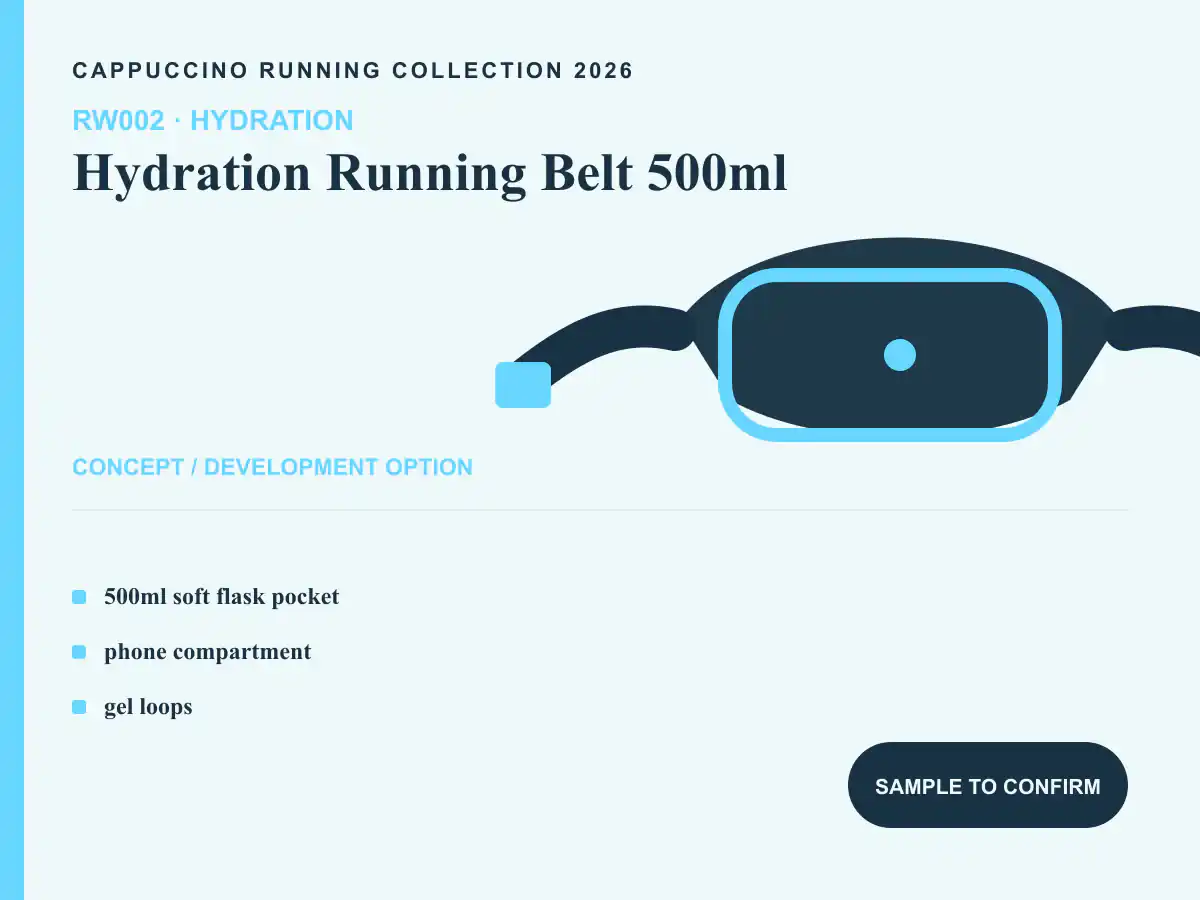
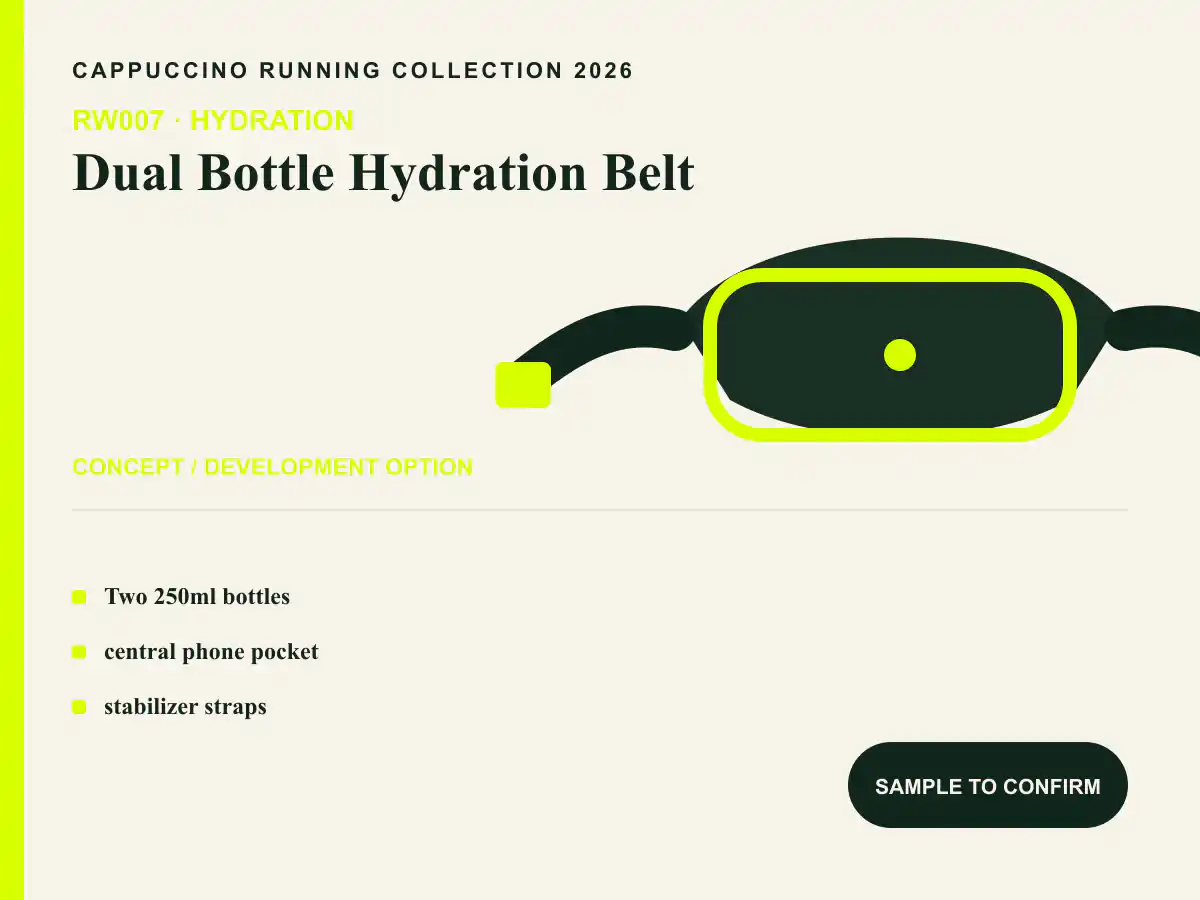
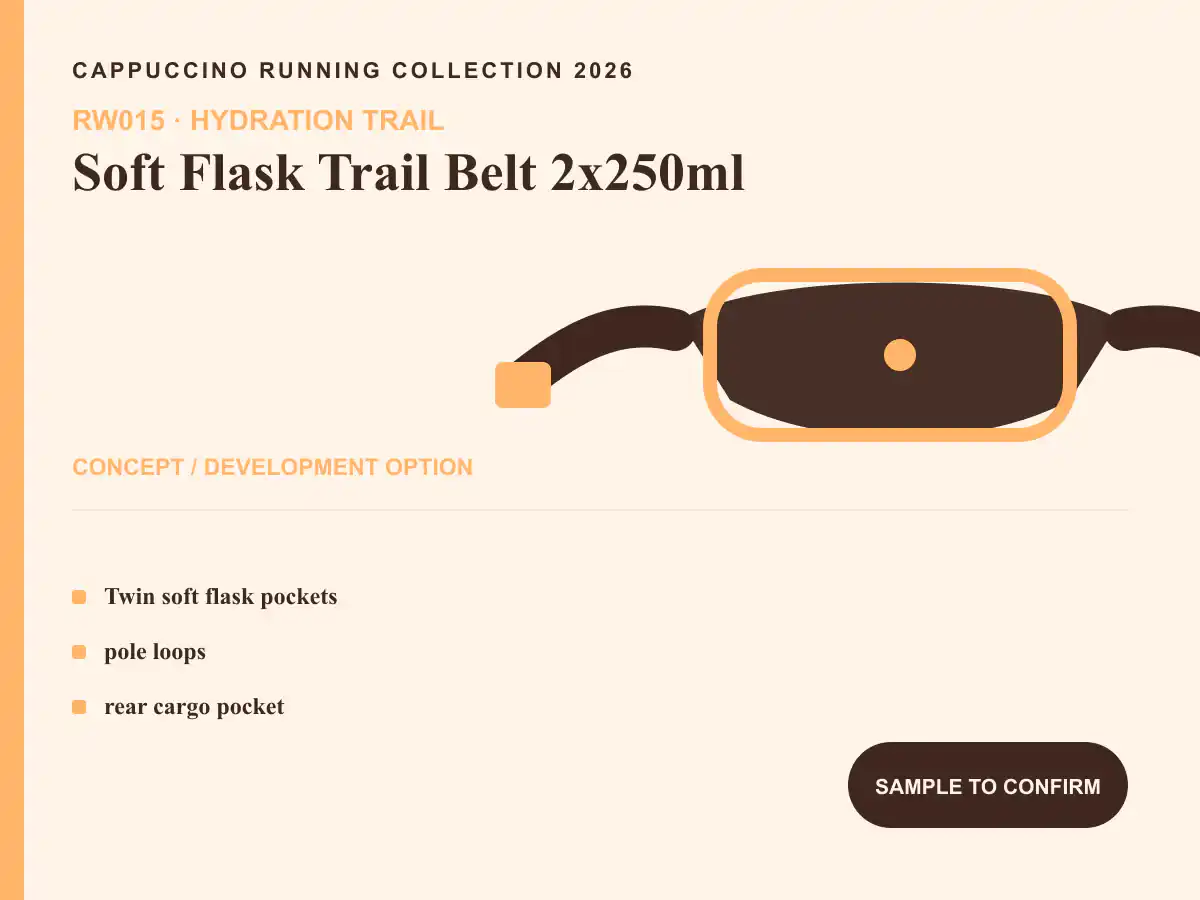
A hydration belt is usually the simpler platform when the intended load is one or two small bottles or soft flasks plus a phone, keys and gels. A vest supports more fluid, layers and mandatory trail gear, but it adds sizing, body coverage and construction complexity. The decision should follow the intended distance, aid-station access and required equipment.
Do not make capacity the only comparison. Buyers should define how quickly the runner must reach hydration, whether the container can be returned one-handed, and how the load changes as the fluid is consumed.
Assess stability and pressure distribution
Belts concentrate load around the waist. Flask position, pocket stretch, belt height, elastic recovery and closure tension determine whether the load bounces or rotates. Vests distribute weight across the torso but require careful shoulder, chest and side adjustment to avoid movement and chafing.
A fair sample comparison uses the same fluid volume and carried items. Test more than one body type and record movement at easy pace, faster pace and on inclines.
Plan climate and body-contact materials
A belt leaves more of the torso uncovered, which can be useful in hot conditions. A vest offers broader load distribution but also creates a larger sweat-contact area. In either format, mesh selection, binding edges, seam placement and drying behavior matter more than a broad claim such as breathable.
Ask the supplier to identify which panels contact the body and how each material will be evaluated. Colorfastness, odor retention and surface abrasion may be relevant depending on the market and care instructions.
Compare sizing and inventory complexity
Many belts use an adjustable size range, while performance vests are commonly graded into multiple sizes. More sizes can improve fit but increase sampling, inventory and forecast complexity. A belt may still need more than one size when the intended waist range is broad or when high carried weight requires a closer fit.
Use body measurements and loaded wear trials to establish grading. Avoid using unverified labels such as one size fits all.
Make the RFQ comparable
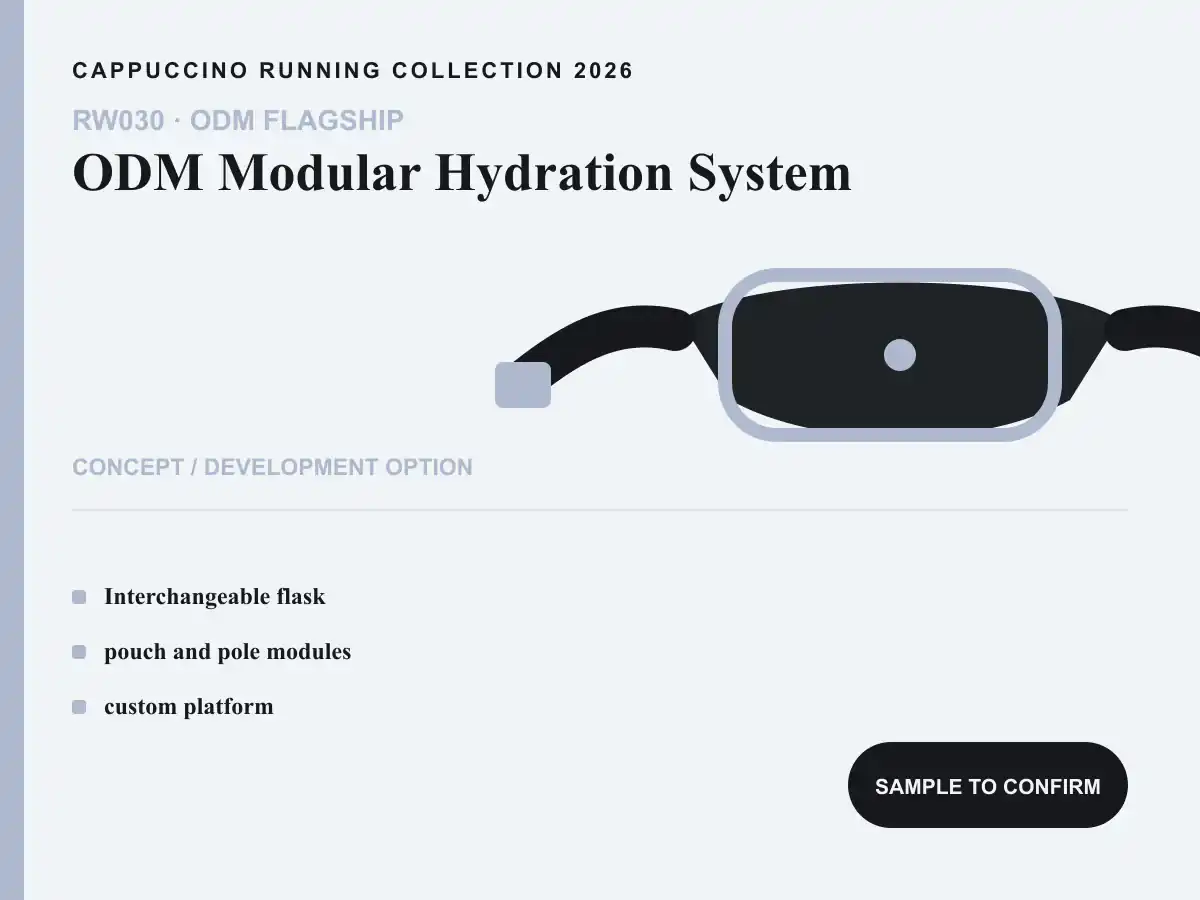
Ask suppliers to quote against the same hydration container, capacity, materials, trims, logo method, packaging and test plan. For belts, define flask placement and phone compatibility. For vests, define size range, pocket map, closure and mandatory-gear capacity.
The most useful choice is the format that meets the runner’s load and access needs with a manageable approval and inventory plan—not the format with the longest feature list.