Start with the runner, load and sales channel
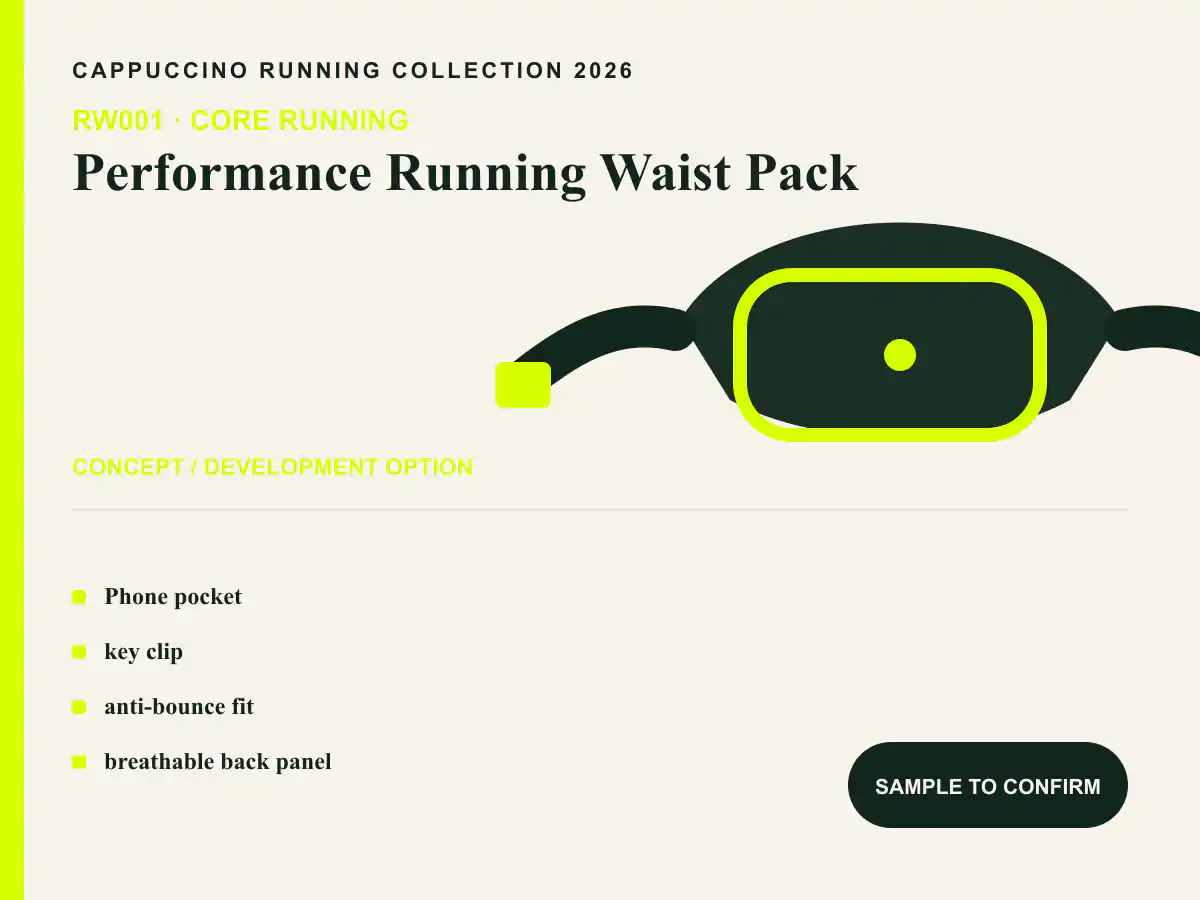
A useful running-belt brief starts with the intended runner and carried load, not with a generic request for a waist bag. State whether the product is for daily phone carry, marathon gels, trail hydration, club merchandise or active travel. Add the phone dimensions, whether a case is used, key and card requirements, hydration format, target waist range and expected retail position.
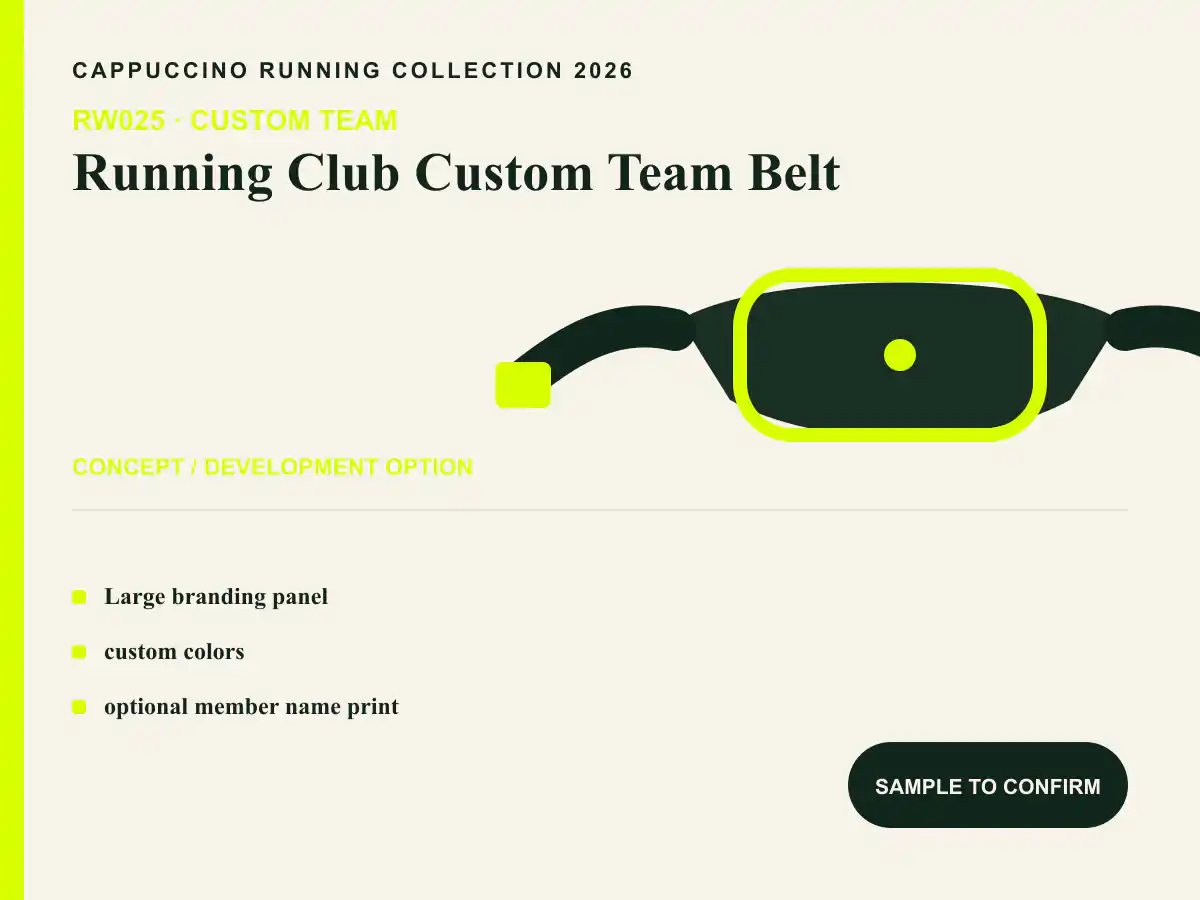
The sales channel changes the product. A promotional race belt may prioritize visible sponsor branding, simple packing and efficient production. A specialist trail product may justify power mesh, coated reinforcements, flask retention, pole loops and more sample revisions. These decisions should be ranked before the first pattern is cut.
Convert the idea into a measurable brief
Provide drawings or reference images, but add measurable fields: finished dimensions, usable pocket opening, waist adjustment range, carried-item dimensions, target product weight, logo size and packaging. Mark which points are mandatory and which can change to meet cost or production constraints.
Avoid copying an existing branded product. Use references to explain functions and construction preferences, then ask the manufacturer to develop an original pattern and detail solution for your program.
Choose materials and components as a system
The body fabric, stretch zones, lining, body-contact mesh, elastic, buckle and zipper affect each other. A lightweight outer fabric does not create a comfortable product if the elastic rolls or the pocket opening becomes difficult to use under tension. Review the bill of materials against sweat contact, abrasion, recovery, color, logo compatibility and the destination market.
If recycled content is required, define what documentation must accompany the order and at what stage it will be reviewed. Do not treat a generic recycled-material option as proof that every finished product is certified.
Sample for movement, not just appearance
Photographs on a table cannot confirm bounce control. Load the sample with the intended phone, gels or flask, fit it across the target waist range and test access while walking and running. Record pocket movement, pressure points, elastic recovery, zipper operation, chafing risk and whether contents shift.
Write revision comments against numbered photos or a marked tech pack. Separate construction changes from color and logo comments so the next sample has a clear approval target.
Prepare for bulk production
Before bulk approval, freeze the pattern version, dimensions and tolerances, materials, colors, hardware, logo artwork, labels, packing method and test expectations. Confirm that the approved sample and signed specification are the comparison references.
MOQ depends on material and customization. Custom-dyed fabric, molded hardware, branded elastic and retail packaging may each introduce separate minimums. Ask the supplier to explain the cost and minimum drivers rather than accepting a single unexplained number.