Define the claim before sourcing
A buyer may want recycled fabric, a material source with relevant GRS scope, a documented transaction or a finished-product claim. These are not interchangeable. Write the required claim, destination market, documentation and approval stage into the brief before the supplier reserves material.
Cappuccino Bag can discuss GRS-source recycled material options, but availability or a supplier document should not be presented as proof that every finished running accessory is certified.
Map every material and component
The shell fabric may represent most of the product by weight, while mesh, lining, elastic, webbing, thread, labels, buckles, zippers and packaging use other materials. Decide which components need recycled content and which conventional components are acceptable for performance or availability.
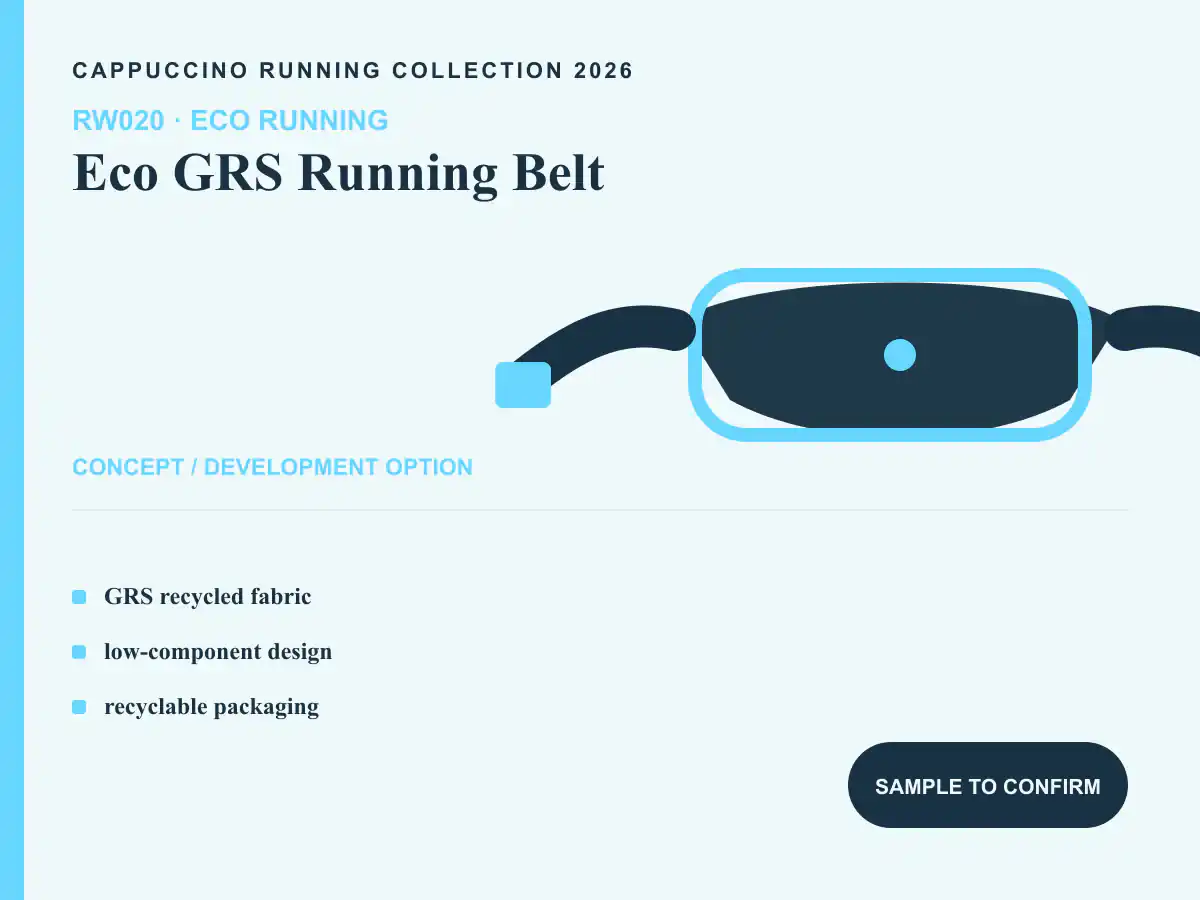
A lower-component design can simplify sourcing and documentation, but it should still meet fit, durability and user needs. Sustainability language does not compensate for a product that fails in use.
Request traceable evidence
Ask which entity supplies the material, which certification is current, what product scope it covers and what transaction documents can be provided for the planned order. Review documents before marketing copy is finalized.
Keep material approvals, color approvals, purchase references and incoming inspection records connected to the production lot. If a substitute is proposed, require written review before use.
Balance performance and impact
Recycled nylon or polyester options still need evaluation for strength, abrasion, stretch, colorfastness, coating, print compatibility and body-contact comfort. Test the actual selected material in the intended construction rather than relying on a generic data sheet.
Packaging decisions can include right-sized polybags or alternatives, recycled-content paper, efficient carton packing and clear disposal information, subject to product protection and destination rules.
Write accurate product communication
Use precise language that matches evidence, such as a named component made from a documented recycled material source. Avoid broad statements implying that the full product, factory or brand has a certification that has not been verified.
Procurement, quality and marketing teams should approve the same claim record. Accurate communication protects buyers and gives sourcing improvements more credibility.