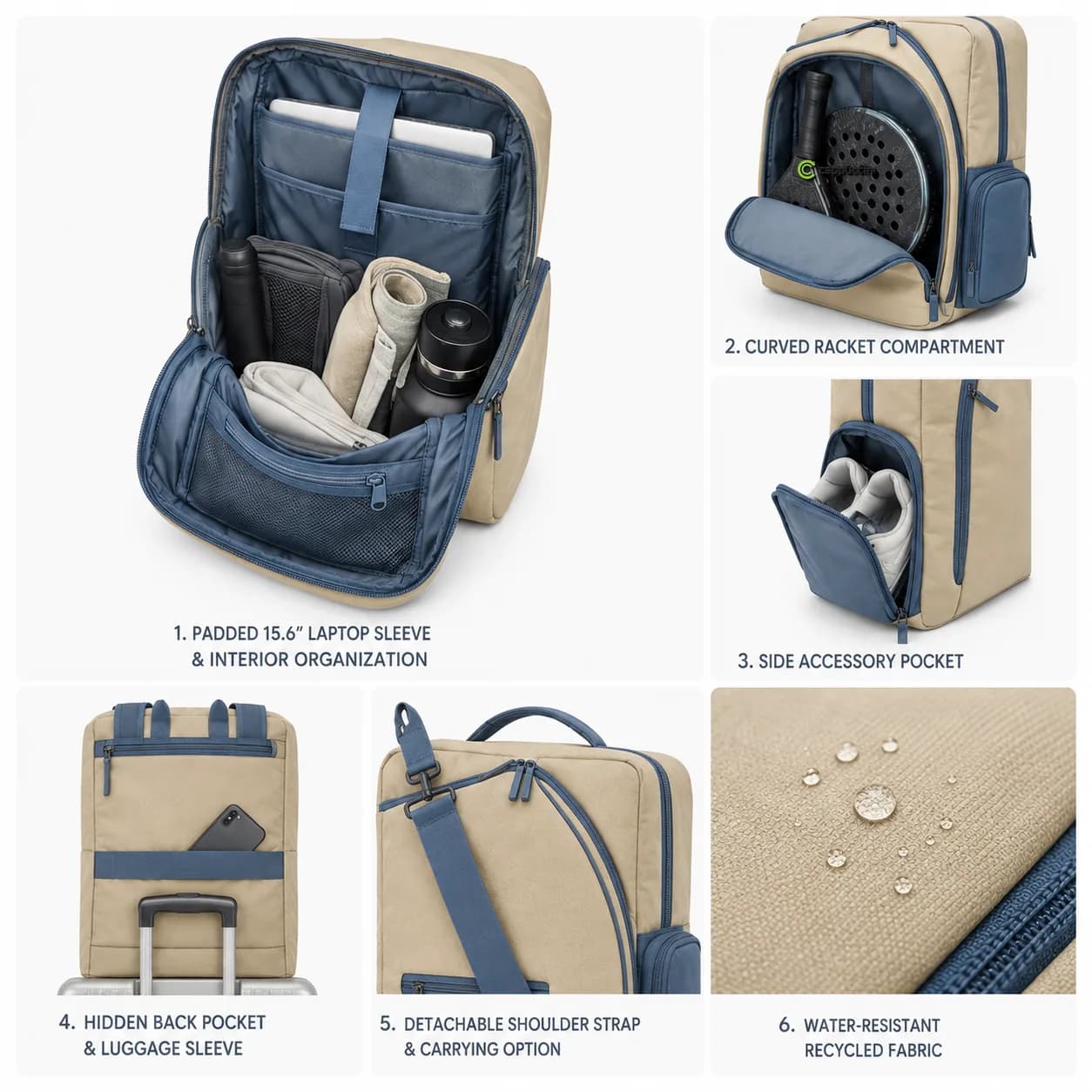
Compare nylon and polyester as complete constructions
Fabric weight, weave, backing and coating change how recycled nylon or polyester behaves. A soft tote may need a different balance from a structured travel backpack even when both use recycled fibers.
Use water-resistant language accurately
A water-resistant face fabric can help with light rain and splashes. Waterproof performance depends on seams, zippers, needle holes and finished construction, so stronger claims require applicable testing.
Verify the certification scope
A recycled material option does not automatically make every finished product GRS certified. Check the selected supplier, material, transaction documentation and order scope before using certification language or marks.
Approve color and hand feel physically
Digital images are useful development references, but coatings, recycled yarns and different production lots can affect texture and color. Approve a swatch and physical sample before bulk production.
Design for useful life and efficient material use
Durable zippers, reinforced high-contact areas, sensible pocket counts and a multi-use design can support longer use. Sustainability decisions should consider the whole construction, not one marketing label.
When do PU or vegan-leather trims make sense?
PU or vegan-leather trims can add edge definition, contrast and a smooth branding surface to a padel bag. The result depends on the trim backing, coating, thickness, fold direction and the area where it is used.
Buyers should decide whether the trim is a small visual accent or a larger structural panel. During development, review edge finishing, seam placement, logo application, colour matching and repeated flex in the physical sample because these choices also affect construction time and cost.
Where should EVA or structural reinforcement be used?
EVA foam or another reinforcement layer can add shape and localized protection around a racket compartment, base or back panel. Extra reinforcement also adds thickness, weight and cost, so the required zones and firmness should be stated in the product brief.
Manufacturing review should confirm reinforcement thickness, lamination, seam allowance and how the material behaves at folds and openings. Test the sample with the intended load rather than judging structure from an empty bag.
What can thermal or insulated racket protection do?
Thermal lining can slow heat transfer, but it does not guarantee a fixed temperature inside a padel bag. Results depend on the insulation layer, coverage, seams, zipper construction, closure time and outside exposure.
Buyers should specify whether insulation covers one racket pocket or a larger compartment and identify the expected use conditions. Material bulk, bonding, cleanability and opening access need sample review, while any temperature or protection claim needs a project-specific test method and evidence.