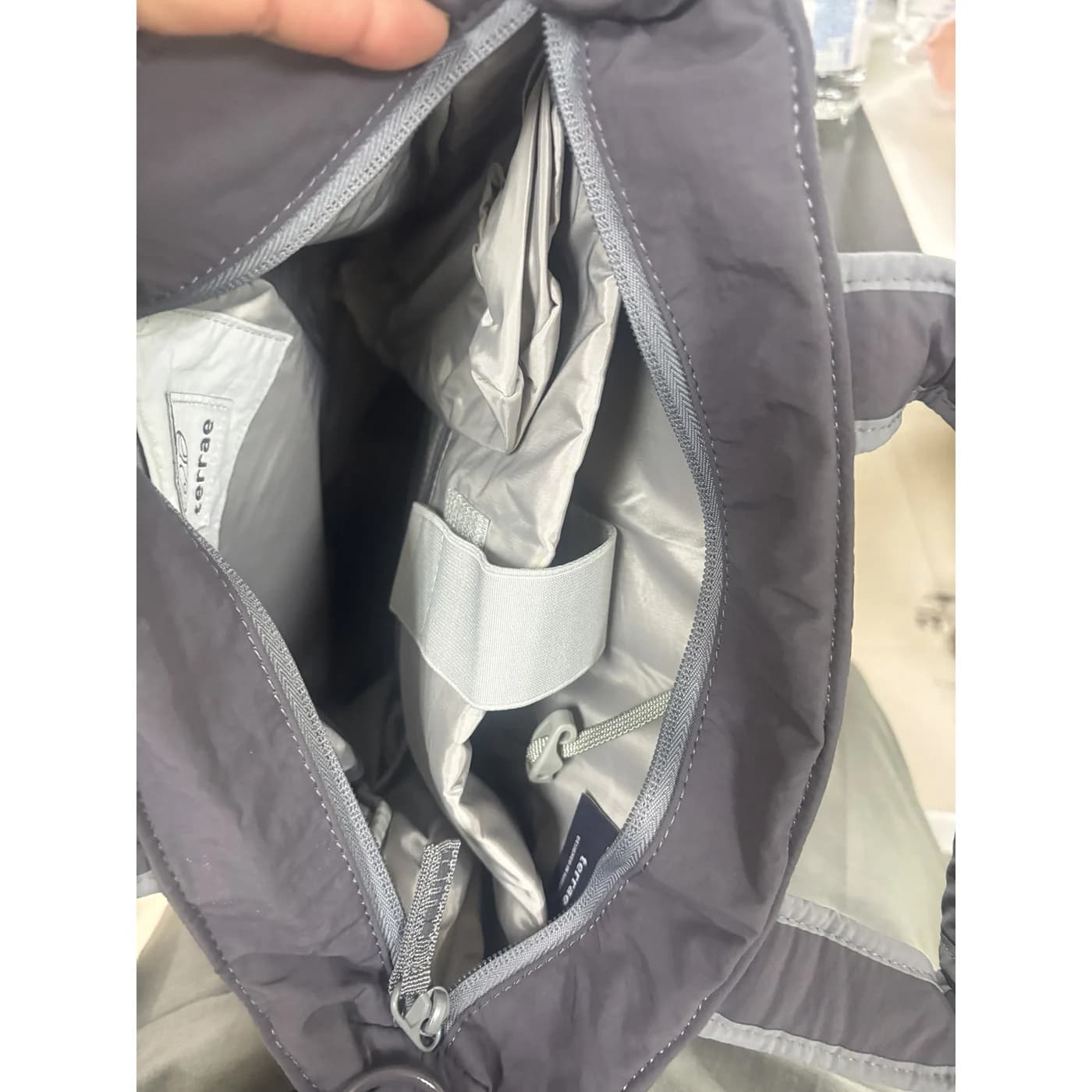
Pocket design should follow user behaviour
Frequently used items should be easiest to reach. A rear zipper pocket can hold travel cards or keys. A phone pocket can separate a device from loose metal items. A side pocket can hold a bottle, while internal slip pockets organize chargers and cables.
A laptop needs its own protected zone
The computer section should prevent direct contact with a racket, bottle and sports accessories. Padding, lining and a securing strap can improve stability, but the final laptop fit must be tested with the target device.
The racket compartment is more than storage
A dedicated racket pocket gives the product a clear sports identity. The opening shape, zipper direction and internal space affect access. A curved zipper can create both functional loading and a recognizable design line.
Security pockets reduce daily friction
A zipper pocket inside the main compartment is useful for passports, cards and small valuables. A rear external zipper pocket offers quick access while keeping items close to the body.
Pocket count must stay balanced
Too many small pockets can make the bag heavy and confusing. The goal is the right number of well-sized pockets for real items. During OEM development, brands should define the target load and build a pocket map before sampling.
Organization creates a clearer product story
Laptop storage, racket separation, a phone position, organizer panel, rear pocket and strap storage give buyers visible reasons to understand the design. Clear detail images help communicate these functions without relying on exaggerated claims.