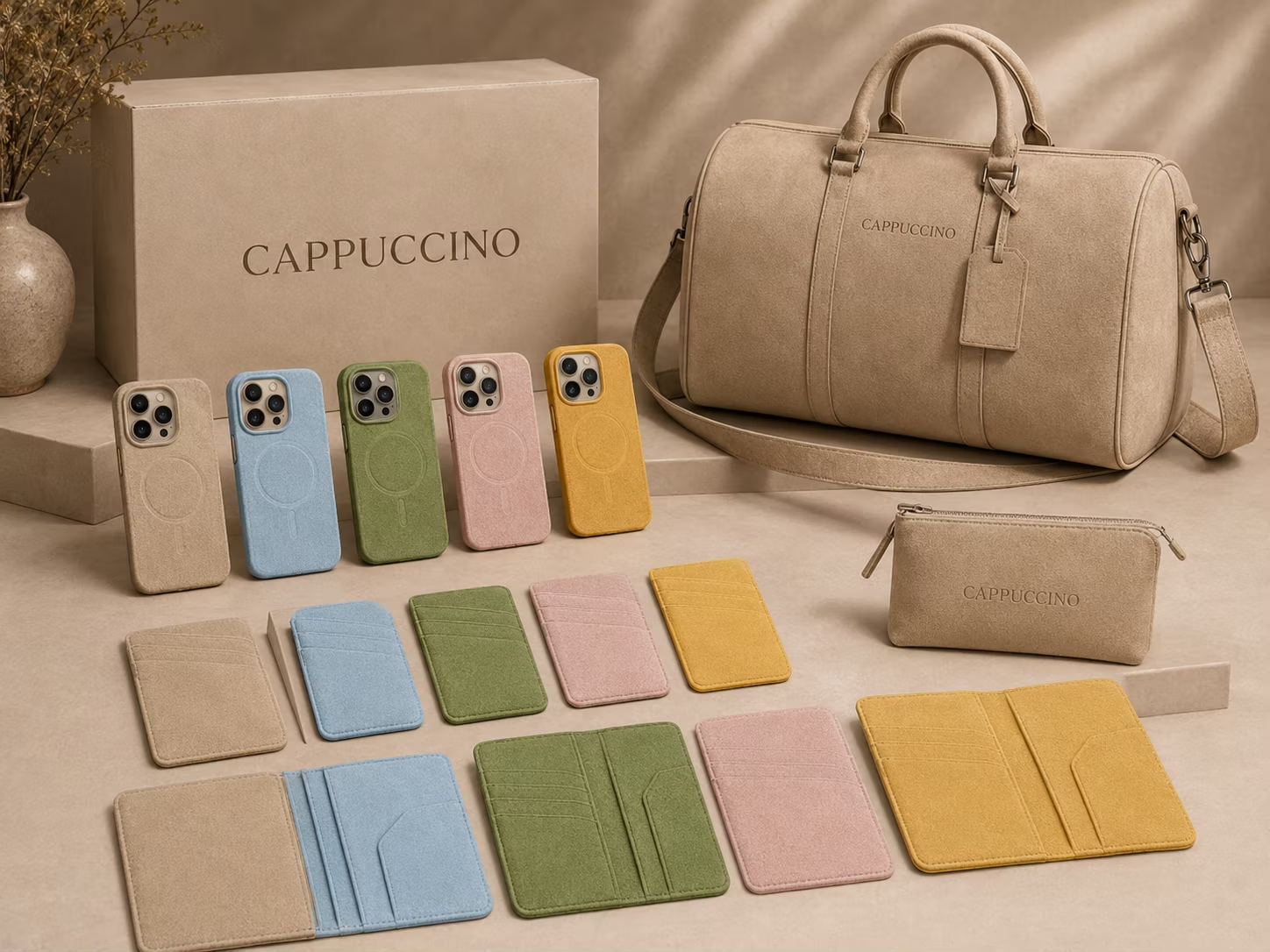
How does an Alcantara OEM project move from design to production? A controlled project begins with a clear client brief, continues through material documentation and application review, pattern making and prototype sampling, and reaches bulk production only after the sample and specification are approved. Quality inspection, packing and shipment then follow the same agreed reference.
Premium material projects are often presented as a simple sequence: choose a colour, add a logo and place an order. In practice, the quality of a custom Alcantara bag or accessory depends on decisions made well before the production line begins. A travel bag needs reinforcement and load-bearing construction. A phone case needs model-specific tolerances. A card holder needs precise slot geometry and controlled thickness. The surface may coordinate the collection, but each product requires a different technical solution.
This guide explains the sequence used to turn a private-label concept into a production-ready project. It also shows buyers where documentation, approvals and consolidated feedback reduce risk. MOQ, sample time and production time are not treated as universal numbers; they are confirmed according to design, material availability, logo method, packaging and order quantity.
1. Client brief, reference images or technical pack
The first useful document is not a purchase order. It is a development brief that tells the factory what the product must achieve. A buyer should identify the product type, target customer, dimensions, estimated quantity, destination market, colour direction, intended price position, logo requirement, packaging and target timing. Reference images help communicate appearance, while a technical pack provides clearer measurements, component details and tolerances.
For a duffle bag, the brief should include capacity, opening style, handle and shoulder-strap requirements, pockets and expected use. For an iPhone case, list every target phone model and any magnetic or wireless-charging requirement. For a card holder, state the number of slots, card or passport format, desired thickness and whether an RFID layer should be evaluated.
2. Alcantara material sourcing and documentation review
Alcantara is a branded material, so the name should not be applied automatically to every suede-touch microfiber. At quotation stage, the buyer and factory clarify whether project-specific Alcantara sourcing is required or whether a documented alternative is acceptable. Available supplier information, colour references, order requirements and relevant origin or certification documents can then be reviewed.
3. Colour, backing, thickness and application evaluation
Colour selection is only one part of material approval. The team evaluates hand feel, backing, thickness, cutting direction, stretch behaviour and the part of the product where the material will be used. A full exterior travel bag places different demands on the material than a phone-case panel or card-holder cover.
High-contact corners, handle anchors, the base of a duffle and the edge of a phone case may need trim, support or an adjusted construction. A card holder needs enough reinforcement to retain cards without becoming bulky. These decisions affect appearance, material consumption and quotation accuracy.
4. Product concept and construction development
The design is translated into a construction that can be sampled and repeated. The team considers openings, seams, folded or painted edges, lining, reinforcement, closures, hardware and assembly order. This is where a coordinated product family becomes technically differentiated.
Duffle bag development
The bag needs a stable base, handle-anchor reinforcement, zipper architecture, shoulder-strap attachments, lining and pocket layout. The material direction must work with the load, shape and packing method.
iPhone case development
The case requires a target shell, camera geometry, button and port access, edge height and controlled material application. If a magnetic ring or related feature is requested, placement, attachment and charging behaviour require sample testing.
Card holder development
The pattern must balance slot retention, easy card access, fold behaviour, edge quality and finished thickness. Small variations are visible, so slot angles, overlap and logo placement need precise confirmation.
5. Pattern making and material consumption planning
Patterns convert the concept into individual cut components. They define seam allowance, folds, reinforcement and visible alignment. The pattern team also estimates material consumption and considers how colour direction or surface orientation should be controlled. Accurate consumption planning supports a more realistic quotation and reduces avoidable variation when the project moves from one sample to many units.
6. Material inspection and precision cutting
Before cutting, the selected material is checked against the approved reference for colour, surface condition and usable area. Cutting plans should protect key visible panels and maintain consistent orientation. Duffle bag panels require attention to larger uninterrupted areas. Phone-case and card-holder pieces are smaller, but their edges and logo zones are viewed at close range.
7. Logo, lining, hardware and reinforcement preparation
Supporting components are prepared before assembly. Depending on the design, this may include lining, zippers, webbing, shoulder-strap hardware, internal boards, shell components, magnetic parts, RFID layers, edge materials and packaging inserts. Logo methods such as embossing, debossing, metal logo, printing or laser marking are retained only when the approved material and sample show a suitable result.
8. First prototype and sample construction
The first prototype turns drawings and material decisions into a physical object. Its purpose is not merely to show colour. It reveals proportion, hand feel, weight, opening behaviour, pocket usability, slot fit, phone fit, edge quality, hardware balance and packaging needs. Sample photographs and videos can support remote review, but buyers should still provide consolidated comments that identify the exact change, location and desired outcome.
9. Fit, appearance, function and workmanship review
The review follows the product’s intended use. A duffle bag is checked for shape, opening, handle comfort, strap attachment, pockets and base support. An iPhone case is checked on the target model for fit, camera and button access, edge height and requested magnetic behaviour. A card holder is checked with cards or a passport for retention, access, fold and thickness. Across all products, the team reviews colour, material application, stitching, edges, logo and cleanliness.
10. Client sample confirmation and revisions
Buyer feedback should be collected into one marked document rather than scattered messages. Revised measurements, colour decisions, logo location, hardware finish and packaging changes should be linked to images or drawing references. This reduces the risk of solving one issue while creating another. If a second sample is required, the revision list becomes the basis of the next build.
11. Pre-production sample and approved specification sheet
A pre-production sample represents the agreed construction before the main order begins. The associated specification records dimensions, materials, components, colour, logo, workmanship points, packing and approved tolerances. This reference is important because bulk production should not rely on memory or a visual image alone.
12. Cutting and production-line preparation
Materials and components are organised against the order plan. Cutting instructions, pattern versions, colour allocation and line references are prepared. The transition from small-batch development to bulk production depends on this step: the approved method must be repeatable, and the components must arrive in the correct sequence for assembly.
13. Sewing, edge finishing and assembly
The factory completes the product according to its construction. Duffle bags move through panel preparation, reinforcement, lining, zipper, handle and hardware assembly. Phone cases focus on shell and material application, openings, edge finishing and any magnetic component. Card holders require precise layer preparation, slot assembly, folding or edge finishing and controlled stitching. In-line checks help identify deviations before the order reaches final inspection.
14. In-line and final quality inspection
Inspection criteria follow the approved sample and specification. Common checkpoints include incoming material condition, colour consistency, dimensions, pattern accuracy, reinforcement, stitching, edge finish, zipper and hardware function, logo position, cleanliness, packaging and carton marks. Product-specific checks are added: carry and compartment details for duffles, model fit for phone cases, and slot fit and fold behaviour for card holders.
15. Packaging, carton marking and global shipment
Approved products are cleaned, shaped where necessary and placed into the agreed retail or protective packaging. The order may include dust bags, tissue, inserts, care cards, paper sleeves, gift boxes, barcode labels and master cartons. Carton marks and shipping documents are prepared according to the buyer’s instructions before release to the nominated freight forwarder or agreed shipping arrangement.
How buyers can reduce colour, logo and structure errors
- Use one controlled technical pack or marked feedback file instead of multiple conflicting message threads.
- Provide vector logo artwork and state the required size, location and colour.
- Approve a physical colour or documented material reference whenever colour accuracy is commercially important.
- List phone models, card formats, dimensions and functional requirements explicitly.
- Confirm the pre-production sample and specification before bulk cutting begins.
- Define packaging, barcode and carton-mark requirements early enough to include them in the production plan.
What information is needed for a quotation?
A useful RFQ includes product type, drawings or reference images, dimensions, target quantity, colour and material direction, logo artwork, lining, hardware, packaging, destination market and required timing. For Alcantara sourcing, state whether project-specific supplier documents are required. For phone cases, provide model quantities. For card holders, provide slot layout. For duffles, provide capacity, compartments and carrying requirements.
Continue with the relevant product page
Review the Custom Alcantara Duffle Bag, Custom Alcantara iPhone Case and Custom Alcantara Card Holder pages for product-specific development points. The Alcantara Collection shows how the three categories can share a coordinated material, colour, logo and packaging system.